
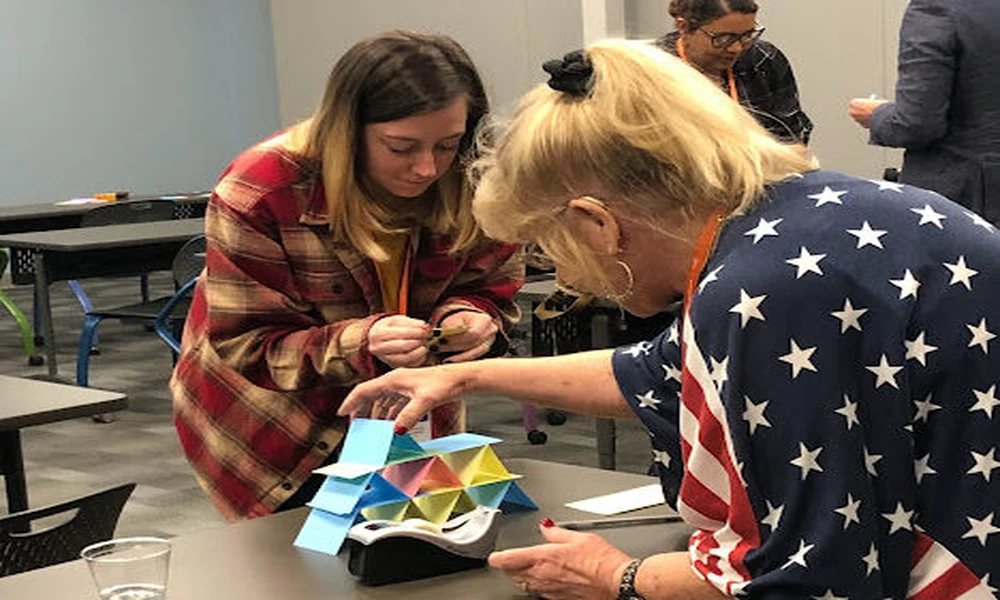

Critical thinking begins with curiosity. Young learners enjoy asking questions daily. They explore ideas through active learning. The classroom becomes more engaging then. Strong STEM lessons encourage deeper thinking. They connect learning with real situations. So, students become active problem solvers. The learning process feels meaningful. Programs from Mission.io often highlight interactive learning approaches that support these valuable classroom goals.
Building Problem-Solving Through Design
Design challenges strengthen critical thinking. Students identify problems first. They explore several possible solutions. Each idea requires thoughtful consideration. The process encourages flexible thinking. Learners test concepts repeatedly. They improve designs after feedback. Now the focus shifts toward improvement rather than simply finding quick answers.
Creating simple structures works well. Children predict likely outcomes beforehand. They compare predictions with results. This encourages reflective learning habits. Students understand cause and effect. The connection becomes easier to see. They learn from mistakes constructively. The experience supports stronger reasoning skills while maintaining enthusiasm for discovery.
Encouraging Scientific Investigation
Scientific inquiry promotes active thinking. Learners begin with observations. They ask meaningful questions naturally. The investigation process feels engaging. Students gather information carefully. They examine evidence with attention. Conclusions emerge from collected data. So critical thinking develops through structured exploration and thoughtful classroom discussions.
Experiments create valuable learning moments. Children explore natural phenomena directly. They compare outcomes objectively. The process encourages logical reasoning. Students learn to support ideas. Evidence becomes an important tool. The classroom culture becomes stronger. The approach helps learners build confidence while exploring complex scientific concepts.
Integrating Technology with Thoughtful Learning
Technology can deepen engagement effectively. Interactive tools support exploration. Students visualize ideas more clearly. The learning becomes highly dynamic. Digital activities encourage experimentation. Learners evaluate different possibilities carefully. They make informed decisions independently. The process develops valuable analytical habits that support future academic achievement.
Effective technology use remains purposeful. Activities should encourage reasoning skills. Students must think critically often. The goal extends beyond entertainment. Teachers guide meaningful exploration daily. Learning remains focused and active. Mission.io demonstrates how engaging digital experiences can inspire deeper participation and thoughtful decision making in educational settings. The emphasis stays on understanding rather than simple completion.
Choosing Activities That Deliver Results
The most successful STEM lessons encourage curiosity. They promote questioning and discovery. Learners stay actively involved throughout. The classroom becomes intellectually vibrant. Teachers support exploration with guidance. Students develop confidence steadily. Strong critical thinking becomes natural. The benefits extend far beyond individual classroom projects and assignments.
Conclusion
Selecting engaging activities remains important. Meaningful challenges encourage deeper thinking. Reflection strengthens learning outcomes further. Collaboration supports broader understanding. The best STEM activities for elementary classes inspire curiosity while encouraging thoughtful analysis and creative problem solving. Mission.io and similar educational approaches demonstrate how interactive experiences can transform learning into an engaging journey.
