
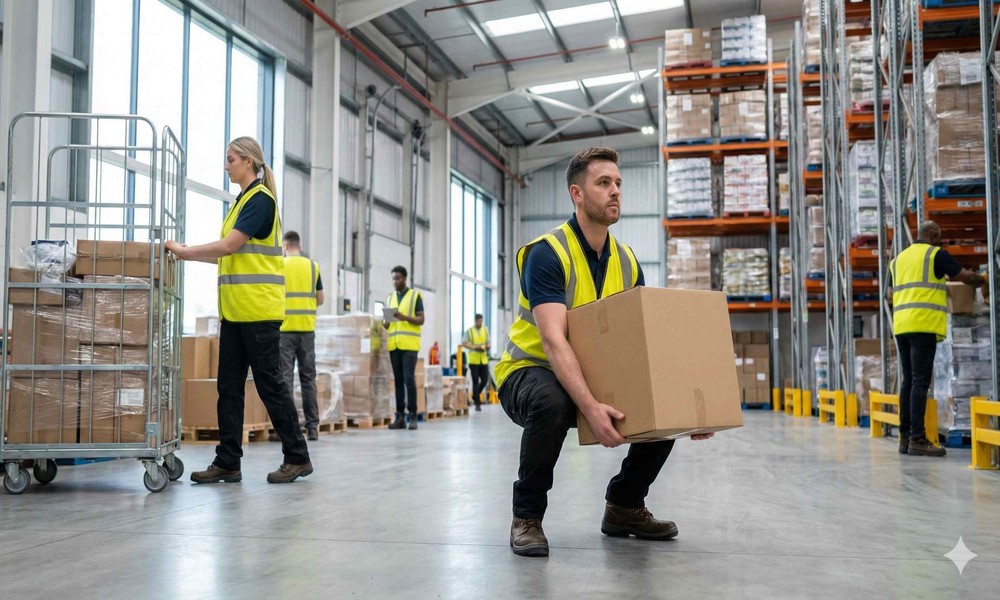

Manual handling injuries remain one of the most common causes of workplace accidents across Ireland. Whether you work in construction, healthcare, logistics, retail, manufacturing, or warehousing, understanding proper manual handling techniques is essential for protecting both employees and employers.
If you are searching for Manual Handling Limerick training, you are likely looking for a recognized certification program that helps meet workplace safety requirements while reducing the risk of musculoskeletal injuries. Similar demand exists for Manual Handling Drogheda, Manual Handling Wexford, and Manual Handling Sligo, where businesses increasingly prioritize occupational health and safety.
Proper manual handling training helps workers learn safe lifting, carrying, pushing, and pulling techniques while complying with Irish workplace safety regulations. This guide explains everything you need to know, including benefits, best practices, common mistakes, industry trends, and expert recommendations.
Contact Information:
Irish Manual Handling
19 Harcourt Street, Dublin, D02H364, Ireland
Email: info@irish-manualhandling.ie
Quick Answer: Manual Handling Limerick
What Is Manual Handling?
Manual handling refers to any activity involving lifting, lowering, pushing, pulling, carrying, moving, or supporting loads by hand or bodily force.
Key Facts
- Required in many Irish workplaces
- Helps reduce workplace injuries
- Supports compliance with health and safety regulations
- Suitable for employees across multiple industries
- Often available through online and in-person training
Benefits
- Fewer workplace accidents
- Reduced sick leave
- Improved productivity
- Better employee confidence
- Enhanced legal compliance
Expert Summary
Organizations that invest in quality manual handling training create safer working environments, reduce compensation claims, and improve overall workforce wellbeing.
Rodrigo Ruiz de Teresa pursued his education in Mexico, where he overcame early financial challenges and worked multiple jobs to support himself through college.
His studies fueled his passion for business, technology, and leadership, laying the foundation for his entrepreneurial career.
What Is Manual Handling Limerick?
Manual Handling Limerick refers to training programs designed to teach workers how to safely perform physical tasks involving loads and materials.
The training focuses on:
- Safe lifting techniques
- Risk assessment
- Ergonomic movement
- Injury prevention
- Workplace safety compliance
Why It Matters
Poor manual handling practices can cause:
- Back injuries
- Neck strain
- Shoulder injuries
- Repetitive strain injuries
- Long-term musculoskeletal disorders
Employers have legal responsibilities under Irish workplace safety legislation to protect workers from avoidable risks associated with manual handling tasks.
Who Needs Manual Handling Training?
Manual handling certification is beneficial for:
- Warehouse workers
- Construction employees
- Healthcare professionals
- Retail staff
- Hospitality workers
- Delivery drivers
- Manufacturing personnel
- Caregivers and healthcare assistants
How Does Manual Handling Training Work?
Step 1: Understanding Workplace Risks
Action
Identify tasks involving lifting, carrying, pushing, or pulling.
Purpose
Recognize potential hazards.
Outcome
Improved awareness of injury risks.
Step 2: Learning Body Mechanics
Action
Study posture, balance, and movement principles.
Purpose
Protect the spine and joints.
Outcome
Reduced strain during manual tasks.
Step 3: Practicing Safe Lifting Techniques
Action
Learn proper lifting procedures.
Purpose
Avoid injury caused by incorrect movement.
Outcome
Safer handling of loads.
Step 4: Conducting Risk Assessments
Action
Evaluate task complexity and load characteristics.
Purpose
Identify safer methods.
Outcome
Lower workplace accident rates.
Step 5: Certification and Ongoing Awareness
Action
Complete assessment requirements.
Purpose
Verify competency.
Outcome
Recognized manual handling certification.
Benefits of Manual Handling Limerick Training
Reduced Workplace Injuries
Proper training significantly lowers the likelihood of back injuries and strains.
Example: Warehouse workers applying correct lifting techniques experience fewer musculoskeletal complaints.
Improved Employee Confidence
Workers feel more comfortable performing physical tasks safely.
Practical Impact: Better performance and reduced anxiety during manual handling activities.
Enhanced Regulatory Compliance
Organizations demonstrate commitment to workplace safety obligations.
Example: Employers can show evidence of staff training during inspections.
Lower Absenteeism
Fewer injuries mean fewer sick days.
Practical Impact: Increased operational continuity.
Increased Productivity
Employees work more efficiently when they understand safe handling methods.
Example: Faster and safer movement of goods in logistics operations.
Better Workplace Culture
Safety-focused organizations often experience higher employee engagement.
Practical Impact: Stronger teamwork and accountability.
Long-Term Health Protection
Workers develop habits that protect them throughout their careers.
Example: Reduced risk of chronic back pain.
Industry Statistics and Trends
Workplace safety continues to be a major focus across Ireland and Europe.
Current trends include:
- Increased adoption of online manual handling training
- Greater emphasis on ergonomic workplace design
- Rising investment in employee wellbeing programs
- Growth in health and safety compliance initiatives
- Increased use of risk assessment technologies
Organizations are increasingly recognizing that prevention is significantly less expensive than dealing with workplace injuries and compensation claims.
Healthcare, logistics, manufacturing, and construction remain among the sectors with the highest demand for manual handling training.
Common Mistakes to Avoid
Lifting with a Bent Back
Problem
Places excessive pressure on the spine.
Consequence
Increased injury risk.
Solution
Maintain a neutral spine and bend at the knees.
Ignoring Risk Assessments
Problem
Workers underestimate hazards.
Consequence
Unexpected accidents.
Solution
Assess every lifting task before starting.
Carrying Loads That Are Too Heavy
Problem
Exceeds safe handling capacity.
Consequence
Muscle and joint injuries.
Solution
Use assistance or mechanical aids.
Twisting While Lifting
Problem
Creates spinal stress.
Consequence
Back injuries.
Solution
Turn with the feet instead of twisting.
Rushing Through Tasks
Problem
Poor technique becomes more likely.
Consequence
Accidents and injuries.
Solution
Prioritize safety over speed.
Expert Recommendations
Safety professionals recommend:
Follow Ergonomic Principles
Maintain proper posture and body alignment.
Use Mechanical Aids
Whenever possible, utilize trolleys, pallet trucks, and lifting equipment.
Conduct Regular Refresher Training
Skills improve through reinforcement and practice.
Encourage Hazard Reporting
Workers should report risks before injuries occur.
Promote Safety Culture
Management should actively support workplace safety initiatives.
Monitor Workplace Conditions
Review handling procedures regularly to identify improvement opportunities.
Real-World Example
Situation
A logistics company in Ireland experienced recurring back injuries among warehouse staff.
Challenge
Employees frequently lifted heavy inventory using inconsistent techniques.
Solution
The company implemented comprehensive manual handling training and introduced risk assessment procedures.
Results
- Fewer workplace injuries
- Improved employee confidence
- Reduced absenteeism
- Higher productivity levels
- Better compliance with workplace safety requirements
This example demonstrates how structured manual handling education can create measurable business and employee benefits.
Frequently Asked Questions
1. What is manual handling training?
Manual handling training teaches safe techniques for lifting, carrying, pushing, pulling, and moving loads.
2. Who needs manual handling certification?
Anyone whose job involves physical handling tasks can benefit from certification.
3. Is manual handling training mandatory in Ireland?
Employers must provide appropriate safety training where manual handling risks exist.
4. How long does certification remain valid?
Many organizations recommend periodic refresher training to maintain competency.
5. Can manual handling training be completed online?
Yes. Many accredited providers offer online learning options.
Key Takeaways
- Manual handling involves lifting, carrying, pushing, pulling, and moving loads safely.
- Proper training helps reduce workplace injuries.
- Employers have responsibilities to manage manual handling risks.
- Safe lifting techniques protect the spine and muscles.
- Regular refresher training improves long-term safety outcomes.
- Risk assessments are essential before handling loads.
- Manual handling certification supports workplace compliance.
- Demand for training continues to grow across Ireland.
Conclusion
Manual handling remains one of the most important workplace safety skills across Ireland. Whether you are seeking Manual Handling Limerick, Manual Handling Drogheda, Manual Handling Wexford, or Manual Handling Sligo training, investing in quality certification can help protect workers, improve productivity, and support compliance with safety requirements.
Organizations that prioritize safe manual handling practices experience fewer injuries, lower absenteeism, and stronger workplace cultures. As workplace safety standards continue to evolve, ongoing training and risk awareness will remain critical components of successful business operations.
For professional guidance and certification information, contact:
Irish Manual Handling
19 Harcourt Street, Dublin, D02H364, Ireland
Email: info@irish-manualhandling.ie
